GARDENING
BLOOMING LOVELY
GARDENING
BLOOMING LOVELY
For unusual plants like blood lilies and nerines keep your eyes open when visiting friends’ gardens and local nurseries.
For others, browse through the selection of bulbs occasionally available at local supermarkets or Google them. Look out for Spanish irises, sparaxis, sprekelia, hymenocallis × festalis and others. You will be spoilt for choice
Burford Hurry
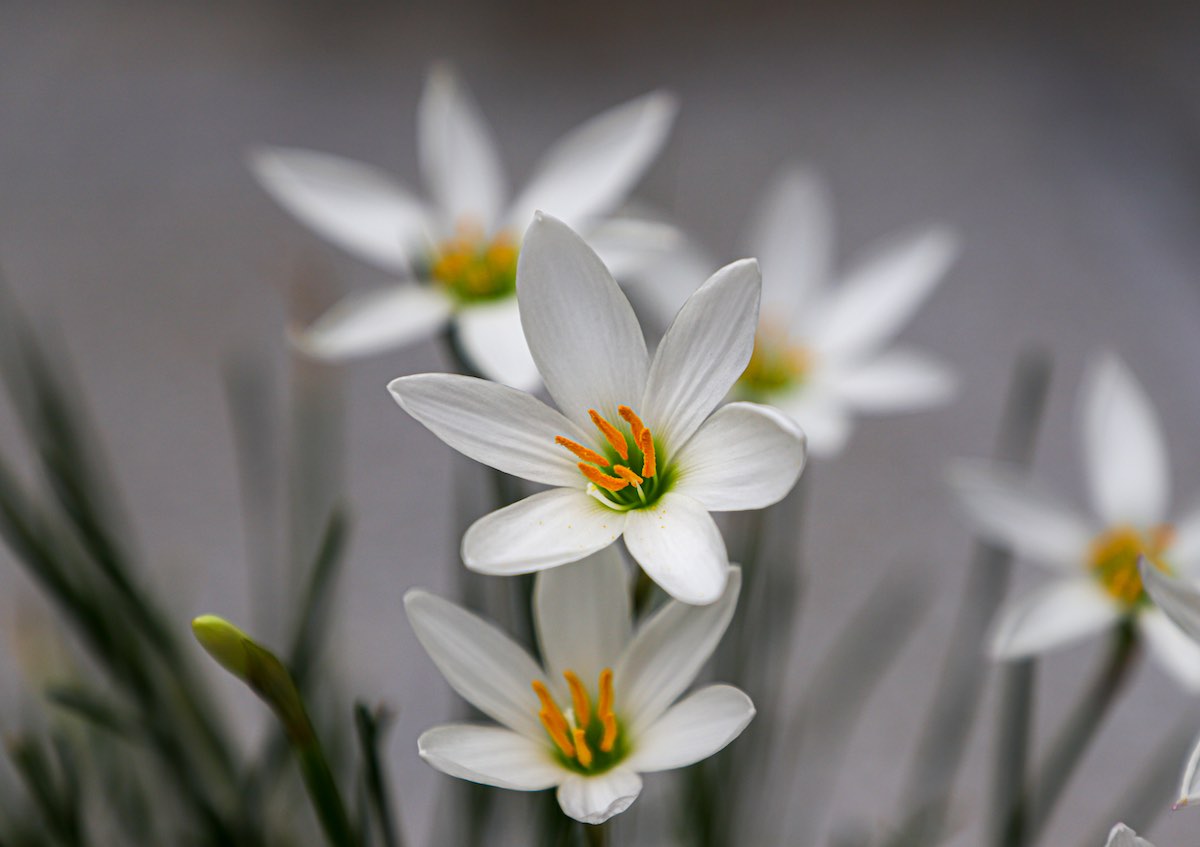
Flame lilies grow in many parts of Africa. I first came across her in the thick semi-tropical bush behind the sand dunes on the beach in the Transkei. Later, when I moved to Zimbabwe, I found her growing everywhere and featuring in publicity from a travel company advertising its Flame Lily Holidays. A clever idea as she is lovely.
I planted her tuber – it looks rather like an extremely large plump worm – in an old blue 20cm-wide enamel cooking pot punctured with holes. Over each hole I placed a curved clay pot shard and then filled the pot with a mixture of my compost and a couple of handfuls of river sand. The bulb was then planted about a centimetre below the surface of the soil. Since then, I repot her every February. Having shrugged off the wet winter in the pot, she usually has grown two or three bulbs so I keep one, replace the soil and plant her back in the pot.
That done, I plant the remaining bulbs in individual pots to give to friends. Once planted, I position her under my olive tree close to a small myrtle so she can climb – her leaves have a tiny curly hook at the end which clings onto other plants as she grows. I have a brilliant seasonal summer special when she shows off her arching, flame curly red petals.
The next special was found four years after we arrived in Loulé and were living in an apartment in the historic part of the city. On a walk with the dogs, I noticed a group of gorgeous golden Spider lilies (Lycoris radiata) flowering in the nearby Jardim dos Amuadas park in front of the Matriz Church. As they were 50cm tall, their impressive golden umbels of flowers glowed against the green of the leaves of the surrounding agapanthus and daylilies. Nothing daunted, I asked the gardener to let me have a bulb or two when they fell dormant, which he eventually did. However, I had to be patient as that only happened in the summer.
At the time these bulbs were new to me. I got to know more about them when I did a bit of research and found that they originally came from the Far East. I was intrigued to learn that Lycoris came in different colours other than golden – in white, orange or red. However, although I have seen them advertised by Dutch bulb growers I have stuck with golden.
One of the most famous nerines is the Guernsey lily (Nerine sarniensis): often regarded as the most beautiful of all the nerines, her impressive glittering blooms range in colour from crimson to scarlet and from pale pink to deep rose. There is also a white form. She flowers in autumn and like the Lycoris radiata and Nerine bowdenii mentioned before, she is a wonderful cut flower. Grow her in a well-drained river sand, loam and compost mix and place the pot in a sunny spot.
Being gorgeous, the Nerine sarniensis also comes with a legend. It is said that centuries ago a shipload of bulbs from South Africa was sailing for Holland when the ship was wrecked on Guernsey. The ship’s contents were rescued and planted, and the growers were so astonished by the beauty of the flowers that they claimed her for themselves and promoted her as the Guernsey lily.
Another suggestion for a brilliantly bright splash of colour is the Kei lily (Cyrtanthus sanguineus) also from South Africa; she is easy to grow and certainly catches the eye in autumn. Because she prefers morning sunshine she is in a pot in the shade of the pomegranate. I also have an Ifafa lily (Cyrtanthus mackenii) with creamy blooms. Not quite so showy as her cousin, she is nevertheless a lovely, hardy, fragrant, and an easy-to-grow South African evergreen bulb, popular for her long-lasting, tubular flowers that bloom from September to February. I have left mine to form a large clump as they like to grow undisturbed for at least five years. Like my Kei lily she grows in the shade of the pomegranate.
In the blood
Another suggestion for an attractive seasonal special is the blood lily (Haemanthus coccineus). She is a dyed-in-the- wool Mediterranean plant if there is ever one, as she comes from the Mediterranean Cape. My bulb came from a large, impressive clump growing in an old garden in Carvoeiro 30 years ago. It is no surprise really, as she is more often found in the older Algarvian gardens.
Early gardeners quickly recognised her as an impressive flowering plant that actually doesn’t need watering in summer. In addition, her powerful broad winter leaves, which she loses with the onset of warmer weather, are as fascinating as her flowers; in fact, I grow her as much for the look of them as her blood red autumn bloom.
Read Burford’s full article in the May issue of AlgarvePLUS.